Understanding Land Documents in Kenya
Imagine standing on a plot you’ve just bought, ready to start building. Months later, someone arrives with papers claiming they own the same land. The dispute goes to court, and the judge asks for your original title deed. You hand it over only to discover key details don’t match government records. This scenario happens more often than it should, and it almost always traces back to one thing: inadequate attention to land documents. In Kenya, your paperwork isn’t just bureaucracy. It is your ownership. Knowing what to look for and what to verify makes the difference between a secure investment and a costly mistake.
The Documents That Define Ownership
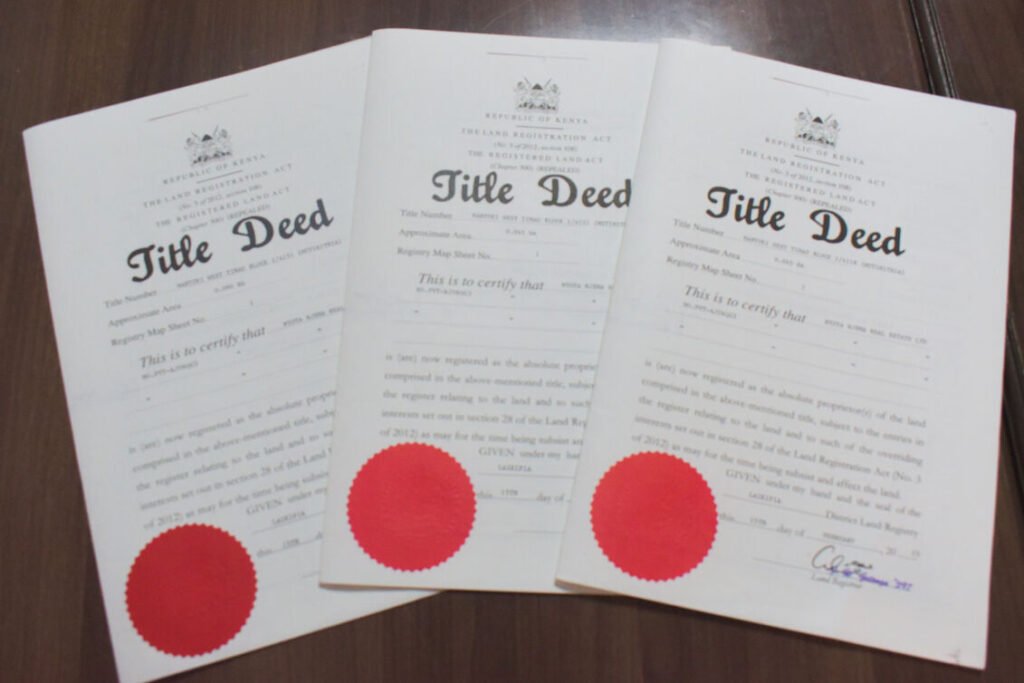
When buying land in Kenya, several documents matter. The most important is the title deed, issued by the Ministry of Lands. This green-covered document shows the registered owner’s name, plot number, size, location, and any caveats or charges registered against the property. Always request to see the original not a photocopy and verify it at the relevant lands registry.
Other critical documents include:
- Survey map: Shows precise boundaries, beacon references, and coordinates. It should match the physical markers on the ground.
- Rates clearance certificate: Confirms all county land rates are paid up to date. Unpaid rates can delay transfer or become your responsibility after purchase.
- Consent to transfer: Required for agricultural land or properties with spousal interests. Skipping this invalidates the sale.
- Search certificate: A current official search (done within 14 days of purchase) confirms the seller is the legal owner and reveals any undisclosed loans or restrictions.
These documents work together. A title deed without a matching survey map leaves boundaries open to dispute. Paid rates without a clean search may hide hidden encumbrances. Verification means checking each piece, not just collecting papers.
What Happens When Documents Are Incomplete
Buying land with missing or questionable documents creates risks that surface later:
- Discovering the seller inherited the land but never transferred the title into their name—meaning they had no legal right to sell.
- Finding an undisclosed loan where the land was used as collateral. The bank can seize it even after you pay the seller.
- Learning the plot sits on trust land or government land where private ownership isn’t permitted.
- Facing rejection at the Ministry of Lands during transfer because required consents were never obtained.
These aren’t rare exceptions. They represent common pitfalls for buyers who rush or rely solely on a seller’s word. Proper due diligence verifying each document against official records takes time but protects your investment permanently.

How LANDS KENYA Approaches Documentation
Since 2015, LANDS KENYA has made document verification central to every transaction. We specialize in verified residential and commercial land across Kenya, and verification begins with paperwork. Before any plot is offered to clients, our team confirms the title deed is original and current, the survey map aligns with ground beacons, all statutory payments are cleared, and necessary consents are in place.
This disciplined approach has supported over 12 billion USD in land transactions and helped more than 1.4 million clients complete purchases without documentation surprises. We provide buyers with copies of all key documents upfront and encourage independent verification at the lands registry. Our role isn’t to replace your due diligence it’s to ensure the foundation for that diligence is solid from the start.

A Practical Buying Process Built on Paperwork
A secure land purchase follows clear steps where documents lead the way:
- Selection: Review available plots with full documentation packages already prepared.
- Document review: Examine the title deed, survey map, and clearance certificates before visiting the site.
- Registry verification: Conduct an official search at the Ministry of Lands to confirm ownership and uncover any hidden issues.
- Site visit: Walk the plot to ensure physical boundaries match the survey map.
- Transfer: Sign agreements only after document verification is complete, then proceed to official transfer and title issuance in your name.
Each step depends on the one before it. Skipping document checks to “move faster” often results in delays, disputes, or total loss later.

Ownership Starts on Paper
Land in Kenya represents opportunity for a home, a business, or long-term security. But that opportunity only becomes real when backed by proper documentation. A plot without verified papers is not an investment. It is a risk. Taking time to understand title deeds, survey maps, and clearance certificates isn’t tedious. It is the essence of responsible buying.
Whether you’re looking at affordable plots in Kenya’s growing towns or commercial land near urban centers, let documentation guide your decision. When the papers are right, everything that follows building, renting, reselling rests on solid ground.
If you’re considering land for sale in Kenya, start with the documents. Browse verified plots with complete paperwork at lands.co.ke, email sales@lands.co.ke to request documentation packages for specific locations, or book a consultation to walk through the verification process with a knowledgeable agent. The right land is available. The right papers make it yours.